
Genghis Khan - the First Globalist
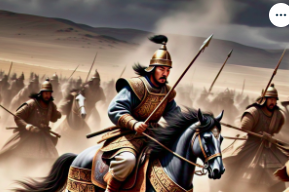
In the early 13th century, the mongol chieftan Genghis Khan brought together the nomadic Mongol tribes of the Asian Steppes and transformed the fragmented collection of constantly warring clans into the largest contiguous land empire in history.
Around 1162, Genghis Kahn came into the world as ‘Temüjin’. Over time he rose from obscurity to establish mounted forces of such discipline and mobility as the world had not previously known. At the time of Genghis Khan’s death in 1227 his Empire extended from the Pacific Ocean to the plains of Eastern Europe, and encompassed diverse lands and peoples who would be introduced to both the terror and the benefits of Mongol rule.
For the conquered, the Mongol invasion initially brought devastation on an unimaginable scale. Cities that offered resistance were methodically destroyed and their populations put to the sword. Scholars have estimated that these conquests may have resulted in the deaths of up to 40 million people - approximately 11% of the world’s population at that time. Under Mongol role, agricultural lands were converted to pasture for Mongol horses, irrigation systems were destroyed, and entire civilizations were traumatized.
Yet, paradoxically, the ‘Pax Mongolica’ (Mongol Peace) that followed Mongol conquest brought unprecedented stability and commercial opportunity across Eurasia. Genghis Khan established a meritocratic system that valued competence over heredity, allowing talented individuals from conquered territories to rise to positions of great influence. Religious tolerance became official policy, with the Khan exempting religious leaders from taxation and conscription. The Mongols also standardized weights, measures, and currencies across their territories, while maintaining the Silk Road as a secure trade network, further facilitating cultural and technological exchange between East and West.
This duality, destruction followed by innovation, characterizes Genghis Khan’s complex legacy. While his conquests caused immense suffering, they also broke down barriers between isolated civilizations and spread important technologies such as paper money, printing, gunpowder, and compass navigation across continents. The Mongol Empire created conditions for cultural synthesis and intellectual exchange that helped to shape the modern world. Thus, Genghis Khan remains a deeply ambiguous historical figure: a brutal conqueror whose vision and organizational genius ultimately connected disparate human societies in ways that would outlast his empire.